
Outer Cartons
Outer cartons used for delivery to our retailers are made from recycled materials reflecting re-use of natural resources as our first preference. Used outer cartons are in turn recyclable, minimizing environmental impacts as much as possible. Our guidance to retailers is to crush and sort used outer cartons into their yellow recyclable packaging bins for easy processing by council material collection and recycling service providers.
Multi-Pack Cartons
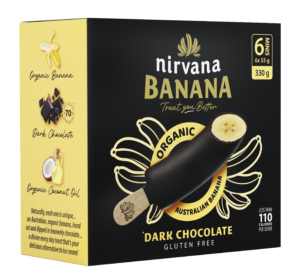
Our multi-pack cartons are recyclable and should also be placed in yellow recyclable packaging bins.
Individual Wrappers
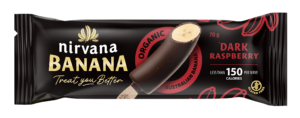
Our individual wrappers for each serving are made from soft scrunchable packaging which is subject to council policies. Council guidelines state:
“Any soft, scrunchable packaging, including flexible plastic ice cream wrappers, must go in your council-supplied (red lid) bins. These items cannot be processed by the machinery used for standard yellow-bin recycling and will contaminate the recycling stream. “
Unless you see evidence of certification, it may be unsafe for consumers to use scrunchable packaging for composting – due to the inherent risks posed by potentially toxic inks and other untested/uncertified packaging material components.
Beware of unsubstantiated claims about compostable packaging
Some food manufacturers make claims about the use of compostable packaging which cannot be verified without independent certification. In Australia & New Zealand, certification of compostable packaging is a rigorous process.
The process is clear cut—managed primarily by the Australasian Bioplastics Association (ABA)—it involves strict testing regimes that make it highly challenging for manufacturers. Manufacturers must prove that the degraded packaging has zero toxic effects on plant growth and earthworm survival. Here is a breakdown of why the certification process is a demanding exercise, and the unique regional challenges associated with it.
- Commercial/Industrial Compostability (AS4736): Requires the material to disintegrate within 12 weeks and completely biodegrade within 6 months in a commercial facility.
- Home Compostability (AS5810): Requires the material to biodegrade in a home compost bin environment, which operates at much lower temperatures, within 12 months.
What makes the Australian and New Zealand standards significantly tougher than European (EN13432) or American (ASTMD6400) equivalents is the ecotoxicity requirement. To pass AS4736 or AS5810, the packaging must undergo a voluntary earthworm toxicity test. Manufacturers must prove that the degraded packaging has zero toxic effects on plant growth and earthworm survival, a hurdle many international materials fail on their first try.
Lengthy Timelines: Because biodegradation tests literally require monitoring the material over 3 to 12 months, the certification timeline cannot be rushed. It frequently takes up to a year from initial submission to receiving the official ABA “Seedling” or “Home Compostable” logo.
Rigorous Laboratory Testing: Packaging cannot just be evaluated as a concept; the exact final format (including all inks, adhesives, and labels) must be sent to independent, accredited laboratories.
High Costs: The laboratory testing phase often costs thousands of dollars per material variation.
Given these factors, we ask that you think about the environment and always adhere to your local council’s guidelines to avoid contamination of the recycling stream.
Sticks
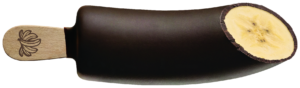
Nirvana Banana’s premium sticks with our distinctive lotus flower logo are eco-friendly and should be placed in red bins provided by local councils to prevent disruption of recycling processing.